
Technology companies must build a brand voice that customers trust. There’s so much competition on the market that it’s absolutely essential. We’ve put together this guide for technology company founders and CMOs to help you build brand voice and tone, and help your content marketing efforts sparkle with consistency and authenticity.
Summary: How to Build a Brand Voice That Customers Trust
Key Foundations
- Brand voice represents your distinct personality and perspective across all communications, determining whether customers see you as approachable, reliable, and authentic
- Trust develops through consistent communication across every touchpoint, not from single clever messages
- A strong brand voice differentiates you from competitors and transforms one-time buyers into loyal advocates
Understanding Your Audience
- Identify both demographics (age, location, profession) and psychographics (motivations, pain points, solutions they seek)
- Align your voice with customer expectations for your industry and brand positioning
- Use research methods like surveys, competitor analysis, customer service transcripts, and sales team interviews to guide language choices
Defining Brand Identity
- Clarify your mission beyond sales: what problem you solve and what change you create
- Establish values that guide difficult choices and infuse your voice with substance
- Define brand personality as human characteristics and determine target emotions for customer interactions
- Align voice with competitive positioning (expert, disruptor, premium choice, accessible option)
Crafting Your Voice
- Select three to five core voice attributes (friendly, authoritative, witty, empathetic, bold, conversational)
- Create a voice chart with concrete examples showing what each attribute sounds like and what it does not
- Prioritize authenticity over imitation of other brands or adoption of trendy language
- Test voice attributes in real scenarios and refine until natural and distinctive
Brand Voice in Content Marketing
- Distinctive voice transforms content from forgettable to memorable in crowded feeds
- Consistent voice improves search rankings by increasing engagement metrics
- Voice differentiates your content when hundreds of competitors cover similar topics
- Clear voice ensures consistency across formats (articles, videos, podcasts, social media)
Building Consistency
- Map every customer touchpoint: website, social media, email, customer service, packaging, sales, advertising
- Train all teams in voice attributes and provide templates that demonstrate proper application
- Adapt voice appropriately for different platforms while maintaining core personality
- Develop comprehensive style guides and appoint a brand voice steward as you scale
Using Storytelling
- Share origin stories and behind-the-scenes content that reveals brand motivations and operations
- Highlight authentic customer experiences with specific details rather than polished marketing copy
- Demonstrate appropriate vulnerability by sharing mistakes, lessons learned, and challenges faced
- Apply voice consistently to storytelling: conversational voices use sensory details, authoritative voices use data
Prioritizing Clarity and Honesty
- Eliminate jargon and industry buzzwords that create friction and distance
- Avoid exaggeration; use specific, accurate descriptions instead of grandiose claims
- Communicate policies, pricing, and product details transparently with limitations stated upfront
- Address mistakes openly with quick acknowledgment, responsibility, and concrete solutions
- Admit what you do not know rather than overpromising
Adapting While Staying Consistent
- Understand that tone (emotional inflection) adjusts for situations while voice (personality) remains constant
- Adjust emphasis across platforms (more professional on LinkedIn, more casual on Instagram) without changing core personality
- Navigate cultural moments thoughtfully; participate only when authentic and aligned with values
- Allow voice to evolve naturally as audience or brand matures, keeping core traits stable
Testing and Refining
- Gather qualitative feedback through surveys, social listening, and team conversations
- Track performance metrics like email open rates, social engagement, and conversion rates
- Run A/B tests on voice approaches to gather concrete effectiveness data
- Review customer service interactions to identify where guidelines help or need improvement
- Conduct annual comprehensive voice audits and quarterly check-ins for adjustments
Taking Action
- View brand voice as a long-term strategic asset that appreciates over time
- Document your voice by defining distinctive attributes and creating actionable examples
- Share guidelines with everyone who communicates on your behalf
- Commit to ongoing listening, testing, and refining based on customer response
Building a Brand: It’s More Than Visuals
Every day, customers encounter thousands of brand messages across websites, social media feeds, email inboxes, and storefronts. In this saturated landscape, the brands that break through are not necessarily the loudest or the flashiest. They are the ones that speak with a clear, consistent voice that customers recognize and trust.
Brand voice shapes how customers perceive your business. It determines whether they see you as approachable or distant, reliable or unpredictable, authentic or manufactured. When executed well, a strong brand voice becomes a strategic asset that builds loyalty, differentiates you from competitors, and transforms one-time buyers into long-term advocates.
The Connection Between Trust and Consistency
Trust does not emerge from a single clever tagline or a perfectly crafted mission statement. It develops through consistent communication across every customer interaction. When your brand sounds the same whether a customer reads your website, scrolls your Instagram feed, or opens a support email, they begin to feel they know you. That familiarity breeds confidence, and confidence drives purchasing decisions.
At its core, brand voice represents the distinct personality and perspective your brand brings to every piece of communication. It encompasses the words you choose, the tone you adopt, and the values you express. While visual identity tells customers what your brand looks like, voice tells them who you are.
And what happens when you produce bad content – content riddled with mistakes and errors? Content that doesn’t speak to your audience? There are hidden costs of poor content. We examine them in greater detail in another article. Suffice to say that it is probably worse to produce bad content than not to produce it at all.
Understand Your Audience
Building a trustworthy brand voice starts with understanding the people you want to reach. You cannot speak authentically to everyone, so clarity about your specific audience becomes essential.
Identify Demographics and Psychographics
Begin by identifying the demographics that define your core customers: their age ranges, locations, professions, and income levels. But demographics alone tell an incomplete story. Dig deeper into psychographics to understand what motivates these individuals, what challenges keep them up at night, and what solutions they actively seek. A software company targeting small business owners needs to understand not just that these customers run companies with fewer than fifty employees, but that they often feel overwhelmed by technology, protective of their limited budgets, and hungry for tools that actually save them time rather than creating new complications.
Align Voice With Customer Expectations
Customer expectations shape how your audience wants to be addressed. A financial advisor’s clients expect gravitas and expertise. A craft brewery’s fans anticipate personality and irreverence. Misjudging these expectations creates immediate friction. When a luxury skincare brand adopts the casual tone of a budget retailer, established customers feel the dissonance, and trust begins to erode.
Use Research to Guide Language Choices
Research provides the foundation for informed voice decisions. Conduct surveys asking customers to describe your brand using personality traits. Analyze which competitors they follow and what language resonates in those spaces. Review customer service transcripts to identify the words and phrases customers use when they talk about their needs. Interview sales teams who speak with prospects daily. These insights reveal the language that will feel natural and credible to your audience rather than forced or performative.
Define Your Brand’s Core Identity
Before you can articulate how your brand sounds, you must understand what your brand stands for. Voice emerges from identity, not the other way around.
Clarify Your Mission and Values
Start by clarifying your mission beyond simply making sales or growing market share. What problem does your brand exist to solve? What change do you want to create in your customers’ lives or in the broader world? A meal kit delivery service might exist to make home cooking accessible to busy families. A sustainable fashion brand might exist to prove that style and environmental responsibility can coexist. These mission statements become touchstones that guide voice decisions.
Your values reveal what matters to your organization when faced with difficult choices. Does your brand prioritize innovation over tradition? Transparency over polish? Inclusivity over exclusivity? Values infuse voice with substance. A brand that values transparency will speak plainly about pricing, acknowledge shortcomings, and share decision-making rationale. A brand that values craftsmanship will use precise language, highlight details, and express pride in workmanship.
Define Your Brand Personality
Brand personality describes the human characteristics you would embody if your company were a person. Consider whether your brand would be the wise mentor, the adventurous friend, the meticulous expert, or the compassionate listener at a dinner party. This personality directly influences voice attributes. An adventurous brand uses dynamic verbs and celebrates risk-taking. A compassionate brand employs gentle language and validates feelings.
Determine Target Emotions and Positioning
The emotional experience you want customers to have during and after interactions provides another anchor point. Should customers feel empowered, comforted, excited, informed, or inspired? These target emotions guide tone choices. A brand selling home security systems wants customers to feel protected and confident, which suggests a reassuring, authoritative voice rather than an anxious or alarmist one.
Finally, consider your brand positioning in the competitive landscape. Position yourself as the:
- Accessible expert, and your voice will explain complex topics in simple terms.
- Premium choice, and your voice will emphasize quality, exclusivity, and refined taste.
- The disruptor and your voice will challenge conventional thinking and celebrate new approaches.
 Craft Your Brand Voice
With audience insights and brand identity established, you can now define the specific characteristics that make your voice distinctive.
Select Core Voice Attributes
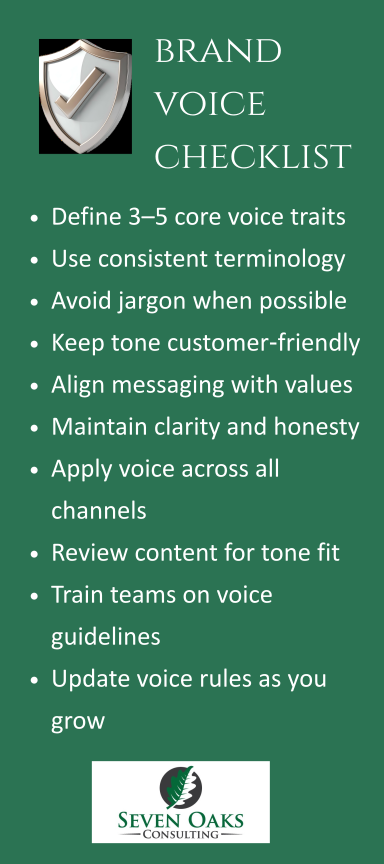
Select three to five core voice attributes that capture your brand’s personality. These attributes function as guardrails, keeping communication consistent even as different team members write different content. Examples include friendly, authoritative, witty, empathetic, bold, conversational, educational, optimistic, irreverent, or professional. Choose attributes that differentiate you from competitors while remaining authentic to your brand identity. If every brand in your category claims to be friendly and approachable, consider whether attributes like precise, thoughtful, or candid might serve you better.
Create a Voice Chart With Examples
Transform these attributes from abstract concepts into practical guidelines by creating a voice chart. For each attribute, provide concrete examples of what this sounds like in practice and what it does not sound like. If one of your attributes is empathetic, show the difference between “We understand this process can feel overwhelming” (empathetic) and “This is a simple process” (dismissive). If another attribute is witty, demonstrate the line between clever wordplay that enhances understanding and forced humor that distracts from the message.
Ensure Authenticity Over Imitation
Authenticity separates memorable brand voices from forgettable ones. Resist the temptation to imitate brands you admire or to adopt trendy language that feels disconnected from your actual culture and values. Customers detect inauthenticity quickly, and once trust breaks, rebuilding it becomes exponentially harder. If your company culture values straightforward communication and problem-solving, a voice dripping with exclamation points and playful slang will ring false. If your team genuinely celebrates quirkiness and creative thinking, a buttoned-up, corporate voice will hide what makes you special.
Test your voice attributes by applying them to real scenarios. Write three versions of the same customer service response, each emphasizing a different attribute. Share product descriptions with team members and ask whether they accurately reflect the brand personality. Revise until the voice feels natural, distinctive, and aligned with both audience expectations and brand identity.
Why Brand Voice Matters in Content Marketing
Content marketing has become the primary way brands build relationships with potential customers before any purchase occurs. Blog posts, videos, podcasts, social media content, and email newsletters all compete for attention in overcrowded feeds and inboxes. In this environment, a distinctive brand voice transforms content from forgettable to memorable.
Voice Drives Content Discoverability
Search engines reward content that keeps readers engaged. When your brand voice makes content more readable, more shareable, and more likely to generate comments and return visits, you improve content performance metrics that influence rankings. A consistent voice also helps you build topical authority as customers begin to recognize and seek out your perspective on industry topics.
Voice Creates Content Differentiation
Hundreds of brands in your space likely publish content about similar topics. Voice determines whether customers read your article about industry trends or your competitor’s. When you approach familiar topics with a distinctive voice, you give readers a reason to choose your content even when the basic information appears elsewhere.
Voice Builds Audience Connection Through Content
Content marketing succeeds when it moves readers from casual visitors to engaged subscribers to loyal customers. This progression requires trust, and trust develops through consistent voice across every piece of content. When readers recognize your voice immediately, whether they find you through search, social media, or email, they begin to form a relationship with your brand that extends beyond any single transaction.
Voice Improves Content Consistency Across Formats
Most content strategies span multiple formats: written articles, video scripts, podcast episodes, infographics, and social media posts. A clearly defined brand voice ensures all these formats feel cohesive. Your video content sounds like your written content, which sounds like your social media presence. This consistency compounds your content’s impact rather than fragmenting it.
Build Consistency Across All Touchpoints
A brand voice only builds trust when customers encounter it everywhere they interact with your brand. Inconsistency creates confusion and suspicion.
Map Every Customer Touchpoint
Map every touchpoint where customers encounter your brand: website homepage and product pages, social media posts and comments, email newsletters and transactional messages, customer service responses, packaging and product inserts, sales presentations, and advertising campaigns. Each touchpoint represents an opportunity to reinforce your voice or undermine it.
Train Teams in Voice Application
Website copy typically receives the most attention during voice development, but customer service interactions often carry more weight in trust-building. A customer who reads warm, conversational website copy but receives cold, robotic email responses will question which voice represents the real brand. Train customer service teams not just in policies and procedures but in voice attributes and examples. Provide response templates that demonstrate the brand voice while allowing for personalization.
Adapt Voice for Different Platforms
Social media presents unique challenges because it demands responsiveness and timeliness. Create guidelines that specify how your voice adapts to different platforms while maintaining core attributes. Your brand might adopt a slightly more casual tone on Instagram than on LinkedIn, but the underlying personality remains consistent. Document how your voice handles common scenarios: How do you celebrate customer wins? How do you respond to negative feedback? How do you participate in trending conversations?
Scale Consistency as You Grow
As your brand grows and more people create content, consistency becomes harder to maintain. Develop style guides and templates that new team members can reference. Include not just grammar and formatting preferences but voice-specific guidance about word choice, sentence structure, and tone. Update these resources regularly as your voice evolves.
Consider appointing a brand voice steward who reviews major communications and helps teams apply voice guidelines to new contexts. This role prevents voice dilution as multiple departments create customer-facing content.
Use Storytelling to Strengthen Trust
Stories bypass skepticism and create emotional connections that abstract claims cannot achieve. When you tell stories that reflect your brand values, customers see evidence of who you are rather than just hearing you assert it.
Share Origin and Behind-the-Scenes Stories
Share origin stories that reveal why your brand exists and what drives your team. A sustainable clothing brand might tell the story of the founder discovering the environmental impact of fast fashion while working in textile manufacturing. These stories humanize your brand and give customers insight into the motivations behind your decisions.
Behind-the-scenes stories demystify your operations and demonstrate transparency. Show customers how products are made, introduce team members who answer their questions, or explain the research process behind a new feature. These glimpses behind the curtain signal that you have nothing to hide.
Highlight Customer Experiences
Customer stories demonstrate real impact and build credibility. Instead of claiming your product changes lives, show how it changed one customer’s life through specific details and authentic language. Feature testimonials that sound like real people speaking rather than polished marketing copy. Include stories of customers who faced challenges or had doubts, making success stories more relatable and believable.
Demonstrate Appropriate Vulnerability
Vulnerability strengthens trust when used judiciously. Share stories about mistakes you made and lessons you learned. Explain challenges you faced launching a new product line or expanding into a new market. This openness demonstrates honesty and creates space for authentic connection. Customers trust brands that acknowledge imperfection more than brands that project flawless execution.
Stories require careful attention to voice. The way you tell a story matters as much as the story itself. A brand with a warm, conversational voice will share customer stories using vivid sensory details and emotional language. A brand with an authoritative, educational voice will frame the same stories through data points and measurable outcomes.
Prioritize Clarity and Honesty
Trust crumbles when customers feel confused, misled, or deceived. Clear, honest communication forms the foundation of a trustworthy brand voice.
Eliminate Jargon and Exaggeration
Eliminate jargon that customers do not understand or industry buzzwords that sound impressive but mean nothing. Every time you force customers to decode your language, you create friction and distance. Write as if you are explaining your product or service to a friend who knows nothing about your industry. If technical terms become necessary, define them simply.
Resist exaggeration and hyperbole. Words like revolutionary, game-changing, and unprecedented have been overused to the point of meaninglessness. Specific, accurate descriptions build more credibility than grandiose claims. Instead of calling your customer service exceptional, explain that your team responds to inquiries within two hours during business days.
Communicate Transparently About Policies and Products
Communicate policies, pricing, and product details with complete transparency. Hidden fees, unclear return policies, and vague product descriptions erode trust faster than almost anything else. State limitations and requirements upfront rather than burying them in fine print. When customers discover restrictions they did not expect, they feel manipulated regardless of your intentions.
Address Mistakes Openly
Address mistakes openly and explain your plan to fix them. Every brand makes errors occasionally. Customers forgive mistakes when brands acknowledge them quickly, take responsibility, and outline concrete steps to prevent recurrence. A shipping delay becomes a trust-building opportunity when you notify customers immediately, explain what went wrong, and offer a genuine solution rather than empty apologies.
Admit What You Don’t Know
Honesty extends to admitting what you do not know or cannot do. If a customer asks whether your product will solve a problem outside its intended use case, saying “I’m not sure, but let me find out” builds more trust than overpromising and underdelivering. Recommending a competitor’s product when it truly fits the customer’s needs better demonstrates integrity that customers remember.
Adapt Without Losing Your Core Voice
Situations change and platforms differ, but your fundamental brand personality should remain recognizable across contexts. The skill lies in adjusting tone while preserving voice.
Understand the Difference Between Voice and Tone
Tone represents the emotional inflection you apply to your voice in specific situations. Your voice might be warm and encouraging, but the tone you use when announcing a product recall will be more serious than the tone you use when celebrating a company milestone. A crisis demands empathy, clarity, and calm. A celebration allows for enthusiasm and joy. These tonal shifts feel natural as long as the underlying voice attributes remain consistent.
Adjust for Platform Differences
Platform differences require thoughtful adaptation. LinkedIn audiences expect more professional, business-focused content than Instagram audiences. Your voice remains the same, but you emphasize different attributes. A playful brand might lead with wit on Twitter but emphasize expertise on LinkedIn while maintaining the same personality.
Navigate Cultural Moments Thoughtfully
Cultural moments and social conversations demand sensitivity. When significant news breaks or cultural conversations unfold, evaluate whether your brand should participate and how. Forced attempts to capitalize on trends damage trust. Authentic participation that aligns with your values and serves your audience strengthens it.
Evolve Your Voice as Your Brand Matures
As your audience matures or your brand evolves, your voice may need gradual refinement. A startup addressing early adopters might use more technical language and insider references than that same company speaking to mainstream customers five years later. These shifts should feel like natural evolution rather than abrupt reinvention. Core personality traits remain stable while expression matures.
Document guidelines for tonal adaptation so team members understand how to adjust for context without losing the brand voice. Provide examples showing how the same message might be delivered in a crisis versus a celebration, on LinkedIn versus Instagram, to loyal customers versus new prospects.
Test, Measure, and Refine
Building a trustworthy brand voice requires ongoing attention and iteration. What resonates with customers today may need adjustment tomorrow.
Gather Qualitative Feedback
Gather qualitative feedback through customer surveys, social media listening, and conversations with sales and support teams. Ask customers to describe your brand using personality traits and compare their descriptions to your intended voice attributes. Gaps between perception and intention signal areas for refinement.
Track Performance Metrics
Monitor how customers respond to different voice approaches. Track which email subject lines generate opens, which social media posts drive engagement, which website copy converts visitors to customers. Patterns emerge that reveal what language and tone resonate most strongly with your audience.
Run Voice Experiments
Test different voice applications through A/B testing. Send two versions of the same email with different voice approaches to segments of your audience and measure response rates. Try alternative versions of product descriptions and track conversion differences. These experiments provide concrete data about voice effectiveness.
Review Customer Service Interactions
Review customer service interactions regularly to identify where voice guidelines serve teams well and where additional guidance would help. If multiple team members struggle to apply voice attributes in specific scenarios, create examples addressing those situations.
Conduct Regular Voice Audits
Conduct periodic voice audits examining content across all touchpoints. Sample website pages, recent social media posts, email campaigns, customer service responses, and marketing materials. Evaluate whether the voice remains consistent and aligned with your defined attributes. Identify areas where voice drift has occurred and provide training or updated guidelines.
Establish a regular cadence for voice review and refinement. Annual comprehensive audits ensure your voice evolves intentionally rather than accidentally. Quarterly check-ins allow for smaller adjustments based on recent feedback and results.
Conclusion
Trust does not emerge from perfection. It grows from consistency, authenticity, and genuine care expressed through every interaction. Your brand voice carries those qualities to customers through the words you choose and the personality you project.
Building a trustworthy brand voice requires investment: investment in understanding your audience deeply, defining your brand identity clearly, crafting guidelines thoughtfully, implementing them consistently, and refining them continuously. This investment pays returns far beyond any single campaign or initiative.
Brands with distinctive, trustworthy voices build loyal communities that recommend them enthusiastically, forgive occasional missteps graciously, and choose them repeatedly over competitors. These customers become advocates who amplify your message more effectively than any advertising budget could.
View your brand voice as a strategic asset that appreciates over time. Every piece of content you create either strengthens that asset or weakens it. Every customer interaction either reinforces the personality you want to project or confuses it.
Start today by documenting your brand voice. Define the attributes that make you distinctive. Create examples that show those attributes in action. Share guidelines with everyone who communicates on your brand’s behalf. Then commit to the ongoing work of listening, testing, and refining.
Your customers want to trust you. Give them a clear, consistent, authentic voice that makes trust possible.